It was an ordinary morning.
Cars passed.
People hurried by.
Trash bins overflowed at the edge of the sidewalk.
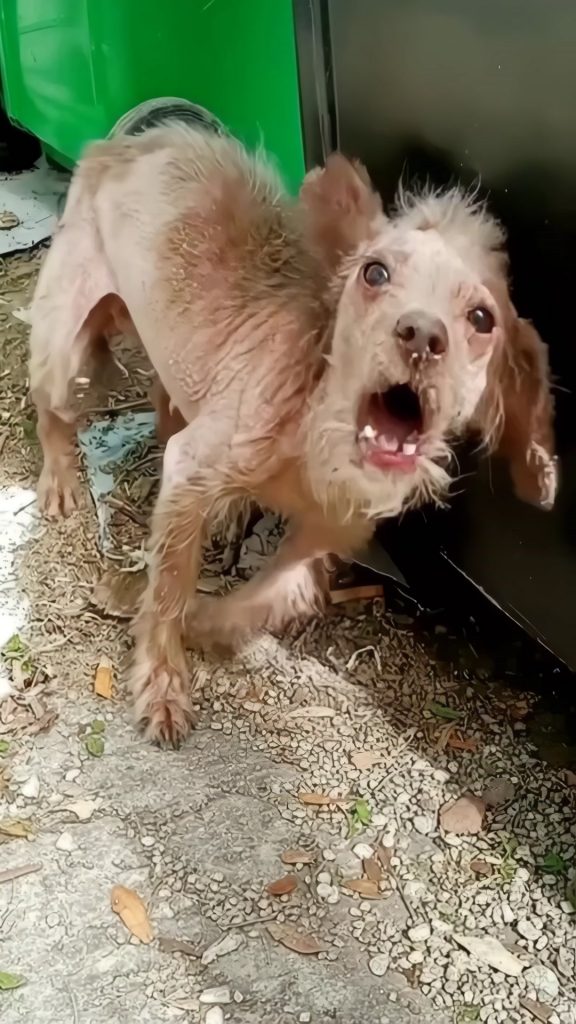
Nothing seemed unusual — until something moved among the torn bags and broken boxes.
At first, it looked like part of the debris.
Then it shifted again.
It was a dog.
Curled low against the pavement, his body frail and trembling, he barely lifted his head. Most of his fur was gone, leaving inflamed skin exposed to the cold air. His ribs pressed sharply against fragile skin, each breath shallow and uneven.
He was alive.
But only just.
A Body That Could No Longer Hold Itself Up
He tried to rise when someone approached.
He couldn’t.
His legs trembled beneath him and gave out almost immediately. Even lifting his head seemed to cost him more strength than he had left. His eyes were wide — not aggressive, not angry.
Just afraid.
Pain had become familiar.
Cold had become constant.
Loneliness had become normal.
And yet, deep in those tired eyes, there was something that hadn’t disappeared.
A quiet will to keep going.
The Choice That Changed His Story
The passerby slowed.
Instead of turning away, they spoke softly. They kept their distance at first, allowing him space. They waited.
When his eyes met theirs, fear was still there — but so was something else.
Hope.
It lasted only a second.
But it was enough.
Carefully, he was wrapped in a blanket and lifted from the pavement. The car ride to the veterinary clinic was quiet, broken only by shallow breathing and soft sounds of discomfort.
For the first time in a long time, he wasn’t being left behind.
The First Gentle Touch
At the clinic, the severity of his condition became clear immediately.
The team began with something simple.
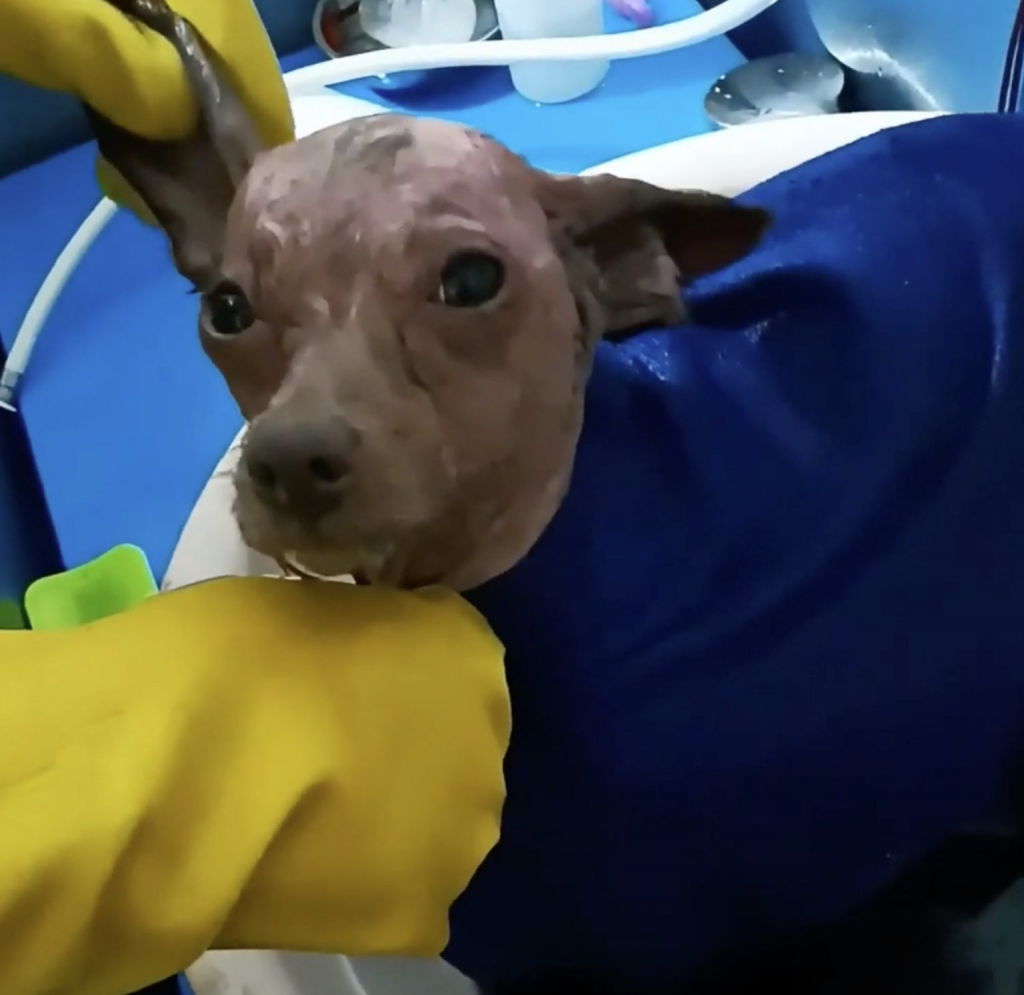
A warm, medicated bath.
As water ran gently over his fragile body, he didn’t resist. He didn’t struggle. He remained still, almost as if he understood this was different.
This wasn’t harm.
This was care.
Hands were steady. Voices were calm. Towels replaced the cold pavement.
And slowly, his body relaxed.
VIDEO: Abandoned Beside a Trash Can, Too Weak to Stand — His Cry for Help Finally Answered
Seeing What He Had Endured
Once clean, the full extent of his suffering could be seen.
His skin was tender and broken in many places, the result of prolonged illness and exposure. Every sore told a quiet story of discomfort endured without relief.
But the team did not see a lost cause.
They saw a survivor.
Soothing treatments were applied carefully. Medication began working beneath the surface. A soft bed replaced concrete. Healing started — not dramatically, but steadily.
And that was enough.
The Smallest Signs of Change
The first days were slow.
Meals were offered in small portions so his weakened body could adjust. Each bite mattered. Each swallow was watched carefully.
Then one day, something subtle happened.
His tail moved.
Only slightly.
But it moved.
His breathing steadied. His eyes followed movement in the room. Where fear once froze him in place, curiosity began to flicker.
It was easy to miss these changes if you weren’t looking closely.
But those who cared for him saw everything.
A Safe Place to Close His Eyes
Between treatments, he rested in a crate lined with warm blankets.
It wasn’t extravagant.
But it was safe.
For the first time, he could sleep without the noise of traffic or the uncertainty of strangers stepping over him. His body, no longer bracing for harm, began to rest deeply.
And sometimes, rest is the beginning of healing.
Watching Trust Return
Weeks passed, and the transformation became visible.
Soft fur began to grow where skin had once been bare. His weight improved. His movements grew steadier.
But the greatest change was in his eyes.
Fear slowly gave way to calm.
He began leaning gently into touch. When someone knelt beside him, he pressed his head forward instead of shrinking back.
He was learning something new.
That the world could be gentle.
From Forgotten to Belonging
Visitors at the shelter often paused when they saw him.
They knelt.
They spoke softly.
They reached out careful hands.
And he responded.
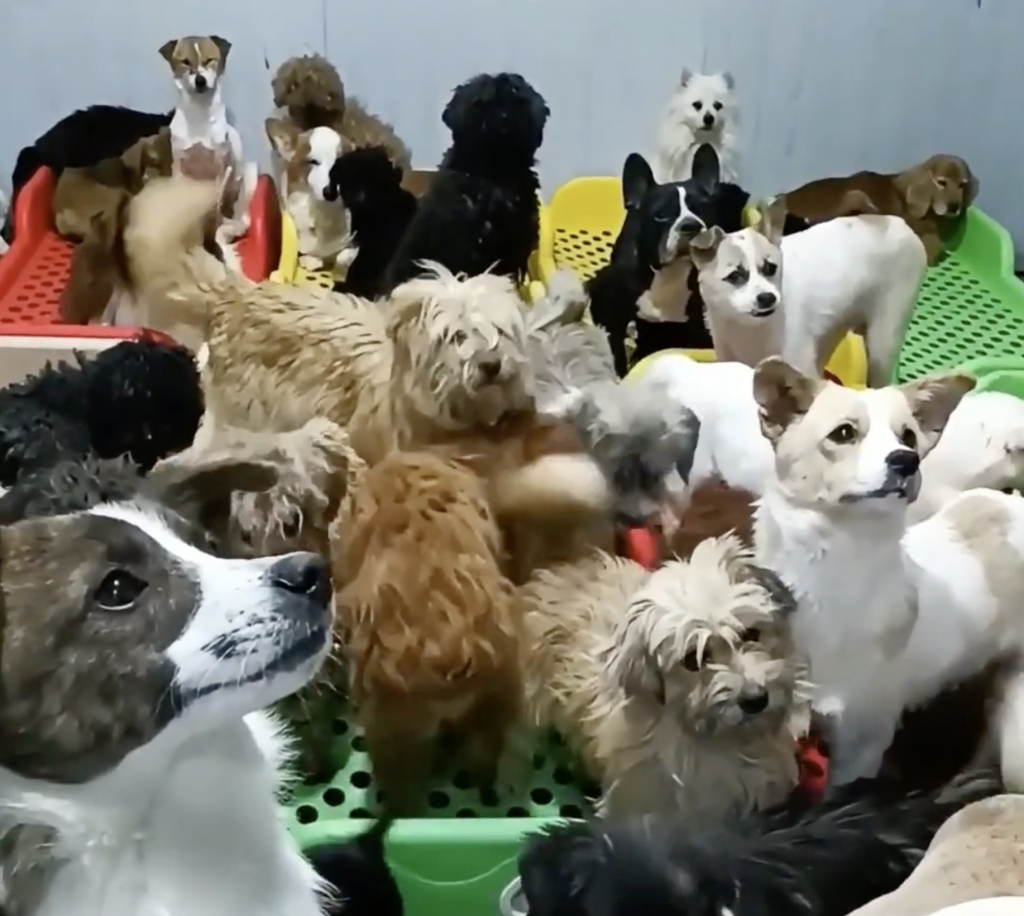
No longer blending into the background, no longer hidden among refuse, he became part of a quiet community of healing — surrounded by others who, like him, had once been overlooked.
He was no longer trash beside a bin.
He was a life being restored.
What His Journey Teaches Us
Rescue is not only about food and medicine.
It is about restoring trust.
About offering patience.
About choosing compassion when it’s easier to look away.
Once abandoned beside overflowing bins, too weak to stand, crying out in pain — he now rests in safety, surrounded by warmth and care.
He may never understand the words spoken around him.
But he understands what matters.
Kindness.
Security.
Belonging.
His story is a quiet reminder that no life is too broken to heal — and sometimes, all it takes is one person willing to stop and truly see.